Article: Infrared Sauna VS Traditional Sauna: Which Is Right for You?
Infrared Sauna VS Traditional Sauna: Which Is Right for You?
Choosing between an Infrared Sauna VS Traditional Sauna is a common dilemma for people who want the health benefits of regular heat therapy. This guide explains how the two types differ, what each does best, practical buying and usage tips, safety considerations, and a simple decision checklist to help you select the right option for your lifestyle and goals.

Quick definitions: what each sauna type is
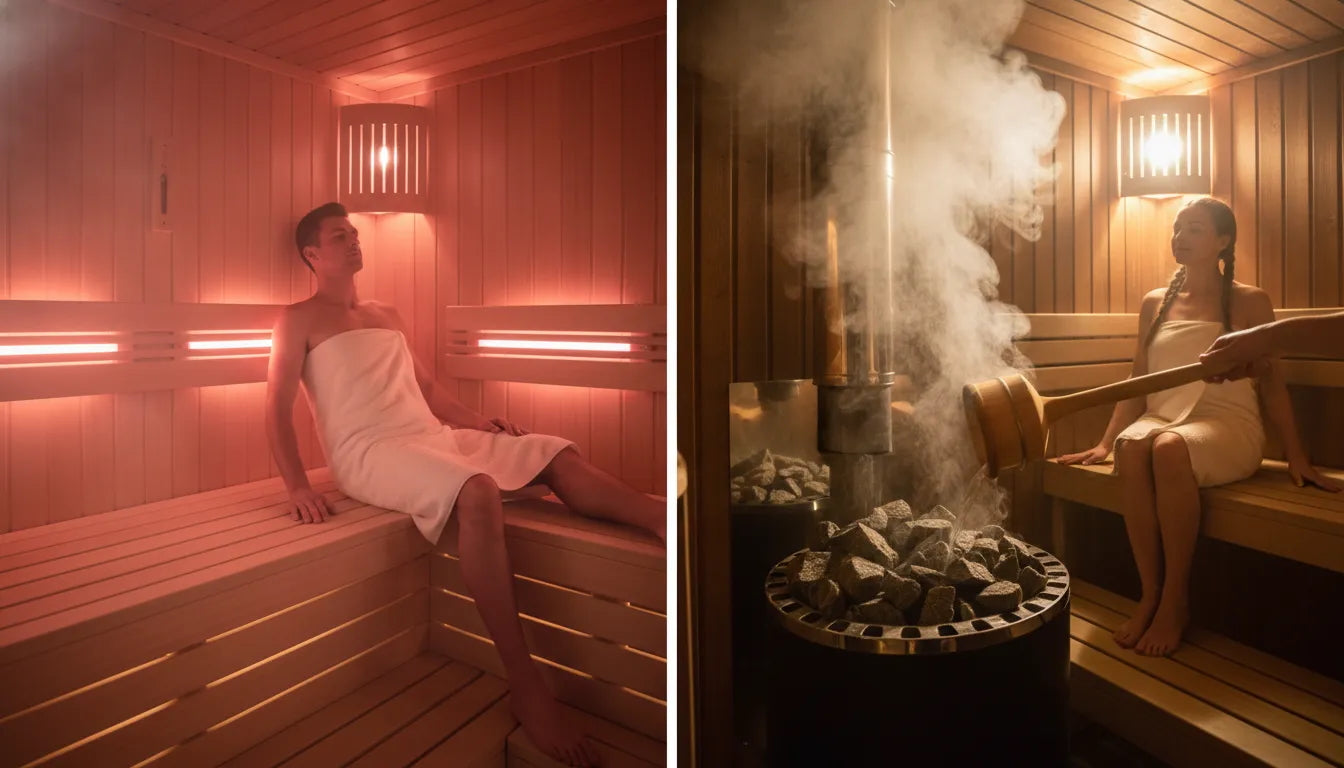
Traditional sauna refers to a steam or dry-heat room warmed by an electric stove or wood-fired heater that heats the air and rocks. Temperatures typically range from 175 to 220 degrees Fahrenheit. Adding water to the rocks produces steam and raises humidity.
Infrared sauna uses heaters that emit infrared wavelengths of light. Those wavelengths are absorbed by your skin and tissues, producing heat from within and typically operating at lower air temperatures, usually between 120 and 160 degrees Fahrenheit.
Key differences: Infrared Sauna VS Traditional Sauna
- Heat source: Traditional heats the air and room surfaces. Infrared heats the body directly via infrared radiation.
- Temperature: Traditional is hotter in the air. Infrared is lower in air temp but can feel intense because it warms tissues.
- Humidity: Traditional can be dry or steamy depending on water use. Infrared is dry unless combined with a steam feature.
- Session style: Traditional often supports social use and short, intense sessions. Infrared is common for solo use and longer sessions at lower temps.
- Space and installation: Traditional saunas need more space, ventilation, and sometimes a dedicated electrical circuit or venting for wood stoves. Infrared cabins are typically compact, plug-and-play models and easier to install indoors.
Health and performance benefits compared
Both sauna types share many overlapping benefits, but the mechanisms and practical outcomes can differ.
- Cardiovascular health: Both support improved circulation, lowered blood pressure, and heart rate variability improvements when used regularly.
- Recovery and muscle soreness: Infrared may promote deeper tissue warming that some users find helpful for sore muscles and recovery. Traditional heat provides strong whole body heat stress that rapidly raises heart rate and sweat response.
- Detox and fat tissue: Sweating occurs with both. Some proponents suggest infrared penetrates deeper into adipose tissue and could mobilize stored pollutants, but scientific evidence remains evolving.
- Mitochondrial and cellular effects: Infrared light can have photobiomodulation effects depending on wavelength and dose. Traditional sauna's intense heat induces hormetic stress pathways that support resilience and heat shock protein activation.
Practical considerations when choosing: Infrared Sauna VS Traditional Sauna
Use this checklist to match a sauna to your priorities.
- Budget: Infrared cabins and blankets are usually less costly upfront and less expensive to operate. Traditional saunas can be pricier to build and maintain.
- Space: If you have limited indoor space, an infrared cabin or a sauna blanket will fit where a traditional sauna might not.
- Time and convenience: Infrared units heat quickly and are plug-and-play. Traditional saunas, especially wood fired, require more setup and time to reach high temperatures.
- Heat tolerance: If you cannot tolerate very high air temperatures, infrared gives deep warming at lower ambient heat.
- Social use: Want to share the experience? Traditional saunas often accommodate more people comfortably.
- EMF concerns: If low electromagnetic field exposure matters, choose a low EMF infrared model or a well-built traditional heater made of non-treated wood.
How to use either sauna safely
Follow these practical rules regardless of which side of the Infrared Sauna VS Traditional Sauna question you choose.
- Hydrate before and after. Drink water and consider electrolytes for longer sessions.
- Start slow. Begin with 5 to 10 minute sessions for beginners and work up to 15 to 30 minutes as tolerated.
- Cool down between sessions. Allow at least 10 minutes of cool rest after a session. A cold shower or cool air helps recovery.
- Avoid alcohol before and during sessions. Alcohol impairs thermoregulation and increases risk.
- Watch for contraindications. Do not use if you have unstable heart disease, uncontrolled hypertension, severe pregnancy complications, or other conditions where heat is contraindicated. Check with a healthcare professional when in doubt.
Buying checklist: what to look for
- For infrared: Check for low EMF certification, type of heaters (carbon versus ceramic), wavelength range (near-infrared and far-infrared differences), materials, and warranty.
- For traditional: Confirm heater type and power, ventilation plans, humidity control, materials (untreated cedar or hemlock preferred), and local building or electrical requirements.
- General: Size, ease of assembly, safety features, customer reviews, and after-sale support.
Common mistakes and pitfalls
- Assuming one type is categorically better. Both offer important benefits; choice depends on goals and logistics.
- Poor ventilation for infrared cabins. Moisture released from heavy sweating can create mold if the room is not ventilated.
- Overdoing sessions. Excessive heat exposure without adequate hydration and rest can cause fainting or heat illness.
- Ignoring EMF specs when concerned. Low EMF models exist and matter for sensitive users.
Sample routines
Two easy routines to try depending on the sauna type.
- Infrared starter: 30 minutes at 120 to 140 degrees, steady breathing and light stretching. Hydrate before and after.
- Traditional starter: 12 to 15 minutes at 175 to 195 degrees, exit to cool for 10 minutes, repeat once if comfortable. Add a splash of water to the rocks for steam if desired.
FAQ
- Does infrared make you sweat as much as a traditional sauna? Yes. Sweat volume depends on session length and individual factors. Infrared users often sweat heavily at lower air temperatures.
- Can infrared reach deep tissues better? Infrared penetrates more directly into superficial tissues, which some people find helpful for muscle and joint pain. Evidence for deeper adipose tissue effects is still emerging.
- Are sauna blankets effective? Sauna blankets are compact infrared options that can deliver similar tissue warming for users who need a portable or low cost solution.
Takeaway
The choice between Infrared Sauna VS Traditional Sauna comes down to goals, budget, space, and heat tolerance. Infrared offers convenient, lower-air-temperature sessions with direct tissue warming and easier installation. Traditional saunas deliver intense whole-body heat, social space, and strong hormetic benefits. Both can improve cardiovascular health, recovery, and wellbeing when used correctly.
Use the buying checklist and safety tips above to match a sauna to your needs, start slow, and build a consistent routine. Regular, safe heat exposure is the principle that matters most.