Can a Sauna Help You Lose Weight? How Saunas Help You Lose Weight, Burn Calories, and Support Weight Loss
Many people ask, "can a sauna help you lose weight?" The short answer: saunas can contribute to temporary weight loss mainly by causing sweating and some increased calorie burn, but they are not a substitute for diet and exercise for long-term losing weight.
How a Sauna May Help with Weight Loss
- Sweat and immediate weight loss: Sitting in a sauna causes rapid fluid loss through sweat, which lowers body weight temporarily. This is mostly water weight and will be regained once you rehydrate.
- Increased heart rate and calorie burn: Heat exposure raises heart rate and metabolic rate modestly, so you burn some extra calories in a sauna session compared with resting at room temperature. The calorie burn is relatively small compared with exercise.
- Infrared vs. traditional saunas: Infrared saunas use radiant heat and may feel hotter at lower air temperatures; some studies suggest similar or slightly different physiological responses, but neither type provides large, sustainable calorie deficits on its own.
- Recovery and exercise support: Saunas can help muscle relaxation and recovery after workouts, which may help you maintain a consistent exercise routine — an important factor for weight management.
What Saunas Cannot Do
- Not a primary fat-loss tool: Saunas do not directly melt fat. Loss of adipose tissue requires a sustained calorie deficit through diet and physical activity.
- Temporary effects: Weight reduction from sweating is temporary and quickly reversed by drinking fluids.
Potential Benefits Beyond Weight
- Improved relaxation and reduced stress, which can help control stress-related eating.
- Improved circulation and potential cardiovascular conditioning from repeated heat exposure.
- Possible improvements in sleep quality and muscle recovery.
Possible Risks of Using a Sauna
- Dehydration: Heavy sweating can cause dangerous fluid and electrolyte loss if you don't rehydrate.
- Overheating and heat illness: Prolonged or excessive heat exposure can lead to heat exhaustion or heat stroke.
- Not safe for everyone: People with cardiovascular disease, low blood pressure, pregnancy, or certain medical conditions should consult a healthcare provider before using saunas.
Practical Tips
- Use saunas as a complement to exercise and a healthy diet, not as a replacement.
- Stay hydrated before and after sessions; replace electrolytes if you sweat heavily.
- Limit sessions to recommended durations (often 10–20 minutes for many users) and avoid consecutive long exposures unless supervised.
- If your goal is fat loss, prioritize consistent calorie control and regular physical activity; view sauna use as an adjunct for recovery and temporary water-weight reduction.
Bottom Line
Saunas can help you lose weight in the short term by causing sweat-induced water loss and may burn a small number of extra calories, but they do not replace calorie deficit strategies required for lasting fat loss. For safe use, follow hydration and time guidelines and consult your doctor if you have health concerns.
Embarking on a weight loss journey often involves exploring various methods to support weight loss and enhance overall well-being. One such method gaining attention is sauna use. But can a sauna actually help you lose weight? Let's explore how saunas can support your weight loss efforts and what benefits they offer.
How a Sauna Helps with Weight Loss: Can a Sauna Help You Lose Weight?
How Sauna Helps with Weight Loss
The notion that a sauna can help you lose weight might seem like a quick fix, but it's more nuanced than that. Using a sauna can complement a healthy lifestyle. While sitting in a sauna does provide some weight loss benefits, it’s best when used in combination with other elements, like a healthy diet and a consistent workout routine. The sauna can help in several ways.
The Science Behind Losing Weight in a Sauna
Several studies have explored the effects of saunas on metabolism and calorie burn. These findings suggest that regular sauna usage and sauna bathing may help improve cardiovascular health and metabolic function, both of which play a role in maintaining a healthy weight and help you burn calories. While saunas can support weight loss by causing water loss through sweating and temporary water weight loss, the immediate drop on the scale mostly reflects water loss through sweating rather than lasting weight loss or long-term weight loss.
Spending time in the sauna or increasing time in the sauna occasionally can make you sweat; saunas make you sweat and sweating in a sauna will cause you to lose fluids and sweat off weight for a short period. That sweat off weight effect does not equate to actually lose fat, though sauna bathing can complement your weight loss program by aiding recovery, helping you sleep better, and potentially boosting calorie burn modestly — you may burn some calories in a sauna but the calories in a sauna are usually far fewer than those burned during exercise. For best results, combine regular use with exercise and diet changes so you can lose weight and keep it off.
Using a sauna after a workout can help improve muscle recovery and circulation; many people step out of the sauna and cool down to replenish fluids and rehydrate, which is important because saunas make you sweat and you will need to replace lost electrolytes. Saunas are generally safe for most adults when used sensibly — moderation, hydration, and awareness of medical conditions are key. While saunas can support weight loss indirectly and sauna usage use can help recovery and relaxation, they are not a standalone solution for lasting weight loss or a substitute for diet and exercise. If you want to actually lose fat, focus on sustainable activity and nutrition, and use saunas to complement your weight loss strategy rather than rely on them to actually help you burn calories to a degree that will produce long-term weight loss.

Types of Saunas for Weight Loss — Which Sauna Helps You Lose Weight?
When considering a sauna for weight loss, an at-home sauna can be a valuable addition to a comprehensive plan. The most relevant types to consider are:
- Infrared sauna (near‑infrared, far‑infrared): uses radiant heat to warm the body directly at lower air temperatures. Infrared saunas promote deep sweating, can raise heart rate and metabolic rate slightly, and are often marketed as a top choice for people asking whether a sauna can help you lose weight.
- Traditional (Finnish) dry sauna: uses heated air and high temperatures to produce intense sweating. It can burn modest extra calories via an elevated heart rate and thermogenesis and is well known for cardiovascular health benefits and improving circulation.
- Steam (wet) sauna or steam room: raises humidity and body temperature to induce sweating. Steam rooms feel hotter and can support temporary water weight loss and relaxation.
- Portable/infrared panels and sauna blankets: lower-cost options that replicate infrared heat and sweating at home, useful for regular sessions when a full sauna isn’t available.
How they help with losing weight: Saunas help by increasing sweat (temporary water loss), slightly raising metabolic rate and heart rate (small extra calorie burn), and improving cardiovascular recovery after exercise. Infrared saunas are often promoted for deeper tissue heating and comfort at lower ambient temperatures, which may make longer sessions easier and increase total calorie burn compared with brief traditional sessions.
What they don’t do: Saunas are not a primary fat‑loss tool. Most immediate weight lost in a session is water that is rapidly regained with rehydration. Long‑term fat loss requires sustained diet and exercise changes; saunas can support recovery, cardiovascular conditioning, and adherence.
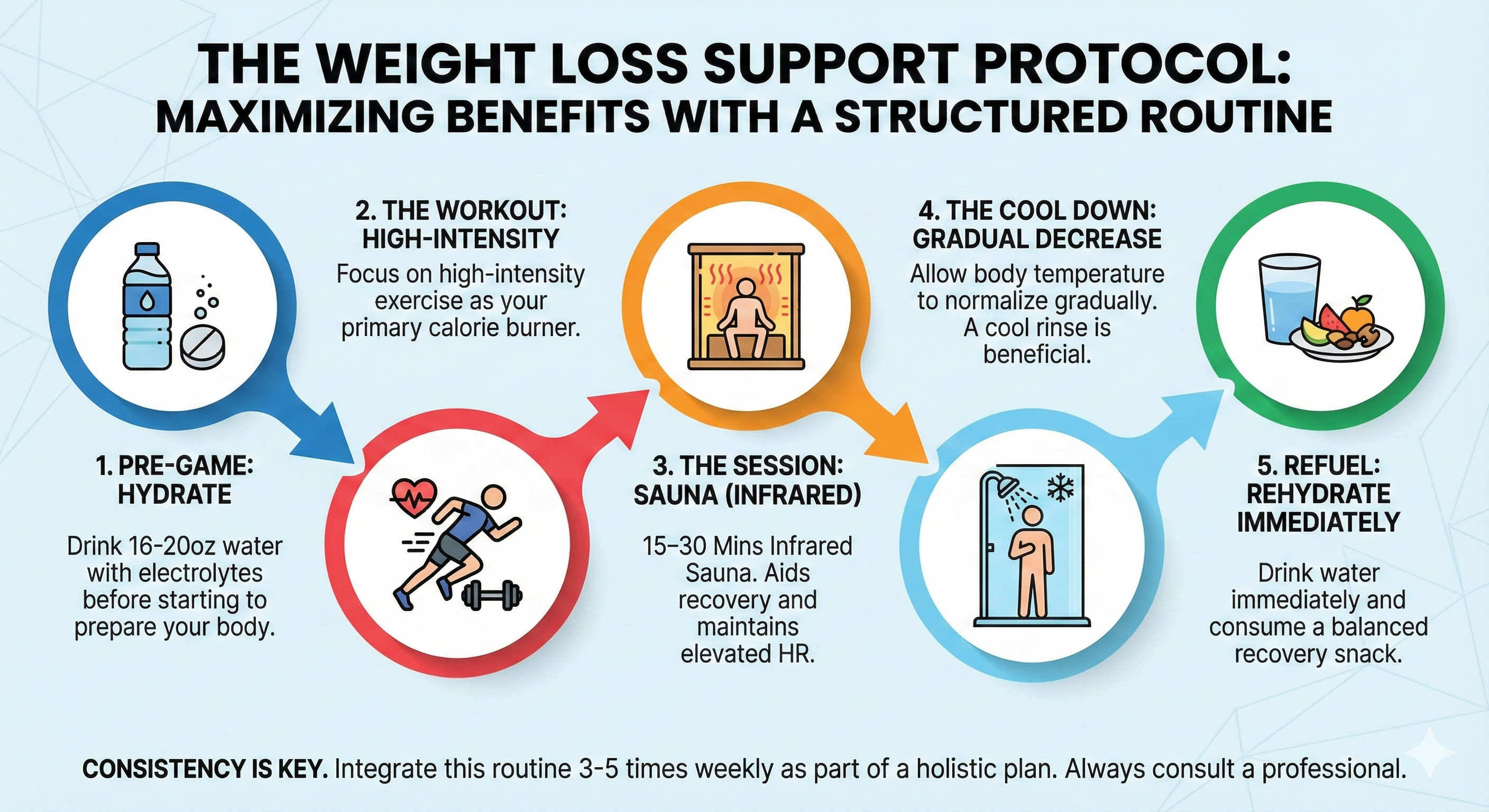
Usage tips for best results: Aim for consistent sessions (e.g., 15–30 minutes, 3–5 times weekly) after consulting a clinician. Combine sauna use with exercise and calorie control to maximize benefits. Rehydrate thoroughly and replace electrolytes as needed.
Possible risks of using saunas for weight loss: dehydration, dizziness, heat exhaustion, worsening of low or unstable blood pressure, and contraindications in pregnancy or certain heart conditions. People on medications that affect fluid balance or blood pressure should check with their healthcare provider before regular sauna use.
In summary, saunas can be a helpful adjunct—especially infrared and traditional saunas—for cardiovascular health, sweat‑induced water loss, and a small increase in calorie burn, but they are most effective for losing weight when paired with diet and exercise rather than used alone.
How Different Types of Saunas Work
There are many types of saunas, but all are essentially heated rooms. They can have temperatures of 150º to 195º Fahrenheit. Though they generally offer the same health benefits, some are dryer while others have more steam and humidity. A Wood Burning sauna uses wood-burning stoves to heat rocks. Expect low humidity and high temperatures in a Wood Burning sauna. An Electrically Heated Sauna uses an electric heater, which is mounted to the wall or floor, to keep the room hot, with low humidity and high temperatures.
Difference between infrared saunas and regular saunas
Although the health benefits of infrared saunas are similar to conventional saunas, they operate differently. Infrared saunas use infrared light waves to heat your body – not the room. Infrared saunas, which heat the body from within rather than just warming the air around you, are particularly effective at increasing heart rate and calorie burn when compared to a regular sauna. Thus, an infrared sauna session can be a good addition to your weight loss plan, helping you burn more calories.
Benefits of Using a Sauna for Weight Loss
One of the primary benefits of sauna use is its ability to help you lose water weight quickly from sweating in the sauna. The loss of water weight can result in a few pounds lost, so you’re likely to see the scale go down after a good sauna session. Beyond the immediate change on the scale, using a sauna for weight loss offers additional health benefits. As you sweat, your body removes toxins through lymphatic fluid. In a sauna session, you sweat a ton, and thus, sweat out a lot of toxins, which can help your body function more efficiently.
Health Benefits of Sauna Therapy
The health benefits of sauna therapy extend beyond mere weight management. Regular sauna sessions can enhance your cardiovascular performance and increase blood flow by increasing the production of nitric oxide, a vasodilator that dilates blood vessels, ultimately leading to better workouts. If you’ve been working out intensely, your muscles might feel sore or fatigued; infrared saunas help reduce inflammation and enhance muscle recovery. The warm, soothing heat of infrared saunas can also help clear congestion, ease respiratory problems, and support overall lung function.
How Infrared Saunas Work for Fat Loss
Infrared saunas are often touted for their potential in fat loss, operating on the principle that the heat and increased circulation can promote a more efficient metabolism. The infrared light penetrates deep into the skin, improving blood flow and oxygen delivery to tissues, thus using a type of sauna that helps with blood flow is critical. As your body temperature rises, the metabolic processes are accelerated and your body may burn calories at an elevated rate.
Is an Infrared Sauna a Best for Weight Loss? The Benefits of Infrared Saunas.
When choosing a type of sauna good for weight loss, it's important to note that both traditional and infrared saunas offer distinct advantages. An infrared sauna is a great tool for supporting weight loss, but it should be part of a larger wellness strategy. Ultimately, the best option depends on your personal preferences and health goals. If you're looking to maximize calorie burn and improve circulation, then an infrared sauna session is a good option.
Weight Loss Benefits of Regular Sauna Use
The weight loss benefits of regular sauna use are diverse. It helps you lose water weight quickly through sweating. You can also remove heavy metals from your body. When you detox and clear out the lymphatic system, your body is better able to burn fat, and you get a nice boost in energy, which can help you exercise more, so you’re losing weight faster. Regular sauna use enhances cardiovascular function, potentially leading to improved physical performance.

How to Use a Sauna Effectively for Weight Loss
To use a sauna effectively for weight loss, it’s important to integrate sauna sessions into a comprehensive approach that includes a healthy diet and regular exercise. For the best weight loss results, pair your sauna sessions with a workout routine. Choose the right temperature and start with lower heat and adjust as needed, but know that infrared saunas are gentler. Saunas can be a powerful tool in a well-rounded weight loss plan and help you burn calories, but they should be a supplement, not a replacement for diet and exercise.
How Often to Use a Sauna for Weight Loss
Ideal Session Length to Sweat Off Weight
When it comes to using a sauna to help with weight loss, moderation and consistency are key—think regular sessions, not marathon stints. Aim for sauna use 3–7 times a week as part of a proper diet and exercise plan, since a sauna alone won't replace healthy eating and workouts. Start small with about five minutes and gradually build up, but even experienced users should avoid staying in a sauna for more than 20–30 minutes at a time. Remember hydration: always drink water before and after to replace the water weight you lose in the heat. In short, combine sauna sessions with consistent exercise, sensible diet, and good hydration for the best results.

Who should not use a sauna for weight loss?
While many can safely enjoy the health benefits of sauna use, it's crucial to recognize that saunas aren't for everyone. Individuals with certain medical conditions should exercise caution and consult a doctor before using a sauna. If you have high blood pressure or are on heart medication, check with your doctor before using a sauna. As with any new regimen, it’s best to consult with a healthcare provider before getting started, especially if you have any pre-existing conditions. It’s always best to consult with a healthcare provider before getting started, especially if you have any pre-existing conditions.
Sauna Safety: Possible Risks of Using Saunas
While saunas offer impressive benefits and relaxation, they can be dangerous. Misuse of saunas can be harmful. Saunas can also be a safety hazard when used incorrectly. Spending too much time in a sauna can lead to dehydration, dizziness, or heat exhaustion. Excessive time in high temperatures can cause nausea, fainting, or heat exhaustion. As we discussed earlier, saunas cause your blood vessels to open up, increasing blood flow and moving closer to the surface of your skin. If you don’t hydrate properly, you could experience severe dehydration, which is a medical emergency. Always hydrate properly before and after a sauna session.
People with Heart Conditions should not use regular saunas
Saunas increase the heart rate, which is risky for people with heart conditions or low blood pressure. Excessive sweating can deplete essential minerals like sodium and potassium, leading to muscle cramps or weakness. Always check with your doctor before using a sauna if you have any heart conditions.

Combining Sauna Therapy with Your Weight Loss Plan
To maximize the benefits of sauna use for weight loss, it's crucial to integrate sauna sessions thoughtfully into your overall weight loss plan. A sauna can help you burn calories, but it’s most effective when used in combination with other methods. Incorporating sauna sessions after workouts may aid recovery and circulation, helping you stay consistent with your fitness routine but they are not going to be the source of your calories burned. Remember, a sauna alone will not replace diet and exercise, but it can be a useful complement to a healthy life.
Incorporating Sauna into Your Weight Loss Routine
Thinking about whether can a sauna help you lose weight? To really make the most of a sauna in your weight-loss routine, it helps to be strategic and a bit cautious. For example, jumping into a sauna before exercise can raise your risk of heat-related problems like heatstroke and leave you feeling faint or dehydrated, so many people find it's better to use the sauna after a workout when your body is already warmed up.
Used post-workout, a sauna can complement your training by promoting relaxation, easing muscle tension, and potentially enhancing recovery — which can indirectly support your fitness efforts and consistency. That said, saunas mostly cause water weight loss from sweating rather than burning significant fat, so they’re not a substitute for calorie control and regular exercise. If you’re aiming for a quick short-term drop in weight for an event, sauna sessions may help with temporary, rapid water loss, but the weight usually returns once you rehydrate.
Keep it sensible: avoid long sessions, stay well hydrated, and listen to your body. People with certain health conditions should check with a healthcare provider before using saunas. In short, a sauna can be a useful tool alongside proper diet and exercise, but it’s not a magic fat-loss solution.
Suggested search terms: can a sauna help you lose weight, sauna weight loss, infrared sauna benefits, sweat weight vs fat loss, post-workout sauna, sauna and hydration, sauna safety, saunas for quick weight loss.
Complementary Practices for Enhanced Weight Loss
Pair your sauna sessions with regular exercise and a workout routine to amplify calorie burning and enhance your weight loss efforts. Focus on whole foods, lean proteins, healthy fats, and complex carbs to fuel your body properly in Balanced Nutrition for your weight loss plan. In regards to Hydration & Recovery, since saunas promote sweating, staying properly hydrated is essential for both performance and weight management. You can even drink cold water right before you get into the sauna. Maintain a balanced diet rich in electrolytes and replenish lost minerals with foods like bananas, nuts, and leafy greens.
Realistic Expectations: How a Sauna Helps With Weight Loss and Can Help You Sweat Off Weight
It’s important to approach sauna use with realistic expectations, understanding that the weight loss experienced is primarily water weight, and after you polish off a large glass of water following up your sauna session, you may find you’re right back to where you started weight wise. Most of the weight you lose in a sauna is water weight, which comes back when you drink liquids again. It’s important to be clear that it’s temporary weight loss, and you’ll need to replenish your water stores and fluid levels, and the water weight will return. With that said, you could use this to your advantage if you need help losing weight quickly for a short-term goal, saunas can help.