
Wim Hof Method: Cold Therapy Benefits & Breathing Techniques Explained | Thermal Rejuvenation

Hacking the Freeze: How Wim Hof Breathing Turns Your Body Into a Cold-Resistant Machine (Backed by Science)
Let’s be honest: staring down a tub of 45°F water is intimidating. Your brain is hardwired to view freezing water as a threat to survival. It screams at you to stay warm, stay dry, and stay comfortable.
Stepping into that cold water requires overriding millions of years of evolutionary programming. It takes grit. But what if you had a physiological "cheat code" that made the transition not just bearable, but empowering?
Enter the Wim Hof Method (WHM) breathing protocol.
For years, Wim Hof (The Iceman) was dismissed by many as a genetic anomaly or a circus act. But recent rigorous academic studies—from institutions like Radboud University in the Netherlands and Wayne State University in Michigan—have confirmed what practitioners have known for years. This isn't "bro-science" or placebo. It is reproducible human biology.
The breathing protocol is not merely meditation; it is a physiological lever that allows you to voluntarily hack your nervous system and alter your blood chemistry to withstand the cold.
Here is the breakdown of how the Wim Hof breathing method prepares your body to conquer the cold plunge.
Real-World Benefits of the Wim Hof + Cold Therapy Combo
How the Wim Hof Method Helps with Cold Exposure: The Adrenaline Hack (Voluntary Activation of the Sympathetic Nervous System)
Normally you can't choose to release adrenaline — it's an automatic response of the autonomic nervous system when faced with a threat like a sudden plunge into freezing water. This involuntary reaction is called the "cold shock" response, and it can cause rapid breathing, panic and a strong urge to gasp.
The Wim Hof Method changes how your body reacts by teaching you breathing and focus so you can voluntarily access parts of the autonomic nervous system before cold exposure. In short, the method shows how the Wim Hof Method helps with cold exposure by giving you tools to prepare your physiology ahead of time.
The core breathing practice involves rounds of controlled hyperventilation (fast, deep breathing) followed by breath retention. A landmark study in PNAS (Proceedings of the National Academy of Sciences) found that people using this technique could voluntarily raise their epinephrine (adrenaline) levels. This demonstrates a clear link between the Wim Hof breathing protocol and measurable changes in stress hormones.
Why this matters for cold plunges and cold exposure training:
Study participants reached adrenaline levels higher than someone about to bungee jump — and they did it while sitting calmly. That means the breathing protocol can safely pre-activate your body's natural stress response.
By practicing the breathing before you step into a cold tub or take an ice bath, you pre-load your system with adrenaline and other stress-response chemicals on your own terms. This "pre-stressing" builds cold tolerance and reduces the panic of the cold shock response. Instead of your body reacting blindly to the cold, you arrive already primed and able to focus, making cold exposure safer, more controlled and more effective for building resilience.
Turning Off the Pain Signal: How the Wim Hof Method Combines Breathwork and Exposure to Cold to Reduce Perceived Stress — Known for Its Powerful, Natural Ways to Boost Resilience
The first shock of icy water feels sharp and unpleasant. The Wim Hof breathing routine—a structured form of breathwork and controlled hyperventilation—reduces the chemical signals that tell your brain "this hurts," making cold immersion and cold plunges easier to tolerate.
During the rapid-breathing stage you exhale large amounts of carbon dioxide (CO2). Many people assume breathlessness comes from low oxygen, but the main driver is rising CO2. By lowering CO2 levels you raise blood pH, producing a temporary respiratory alkalosis (the blood becomes more alkaline).
Why that helps with cold therapy: this alkaline shift alters nerve signaling and lowers sensitivity to pain. It specifically desensitizes receptors like TRPV1, which detect extreme temperature and painful stimuli, so the cold shock feels less intense.
At the same time, neuroimaging studies show the method activates the Periaqueductal Gray (PAG), a brain region that controls pain suppression. Activation of the PAG promotes the release of endogenous opioids—your body’s natural pain-relief chemicals—further reducing discomfort during cold exposure.
The combined effect of CO2 reduction, respiratory alkalosis, receptor desensitization, and PAG-driven opioid release means that after a few breathing rounds your nervous system is chemically primed for thermal stress. That’s how the WHM’s breathwork improves cold tolerance, making repeated cold baths, ice immersion, and cold therapy sessions more manageable and supporting adaptation to cold environments.
How the Wim Hof Method Helps With Cold Exposure: Boosting Your Internal Furnace (Metabolic Heating)
In short, the Wim Hof Method breathing is like an internal workout that helps generate heat from the inside out, supporting cold exposure and improving cold tolerance.
Researchers at Wayne State found that the forceful inhalations and exhalations in this breathwork recruit the intercostal muscles (between the ribs) and increase local glucose use. That metabolic activity acts like an “internal furnace,” producing thermogenesis and helping maintain core temperature during cold exposure. In other words, WHM breath training—controlled hyperventilation and rhythmic breath retention—helps the body adapt to cold by boosting internal heat production and strengthening physiological resilience.
Safety First — How the Wim Hof Method Helps with Cold Exposure: Step-by-Step Protocol, Breathing Techniques, Gradual Cold Adaptation, Contraindications and Risk-Reduction Guidelines
While the science is exciting for those seeking performance, the protocol must be respected to ensure safety.
The most critical rule of the Wim Hof Method is this: Never perform the breathing technique in or near water.
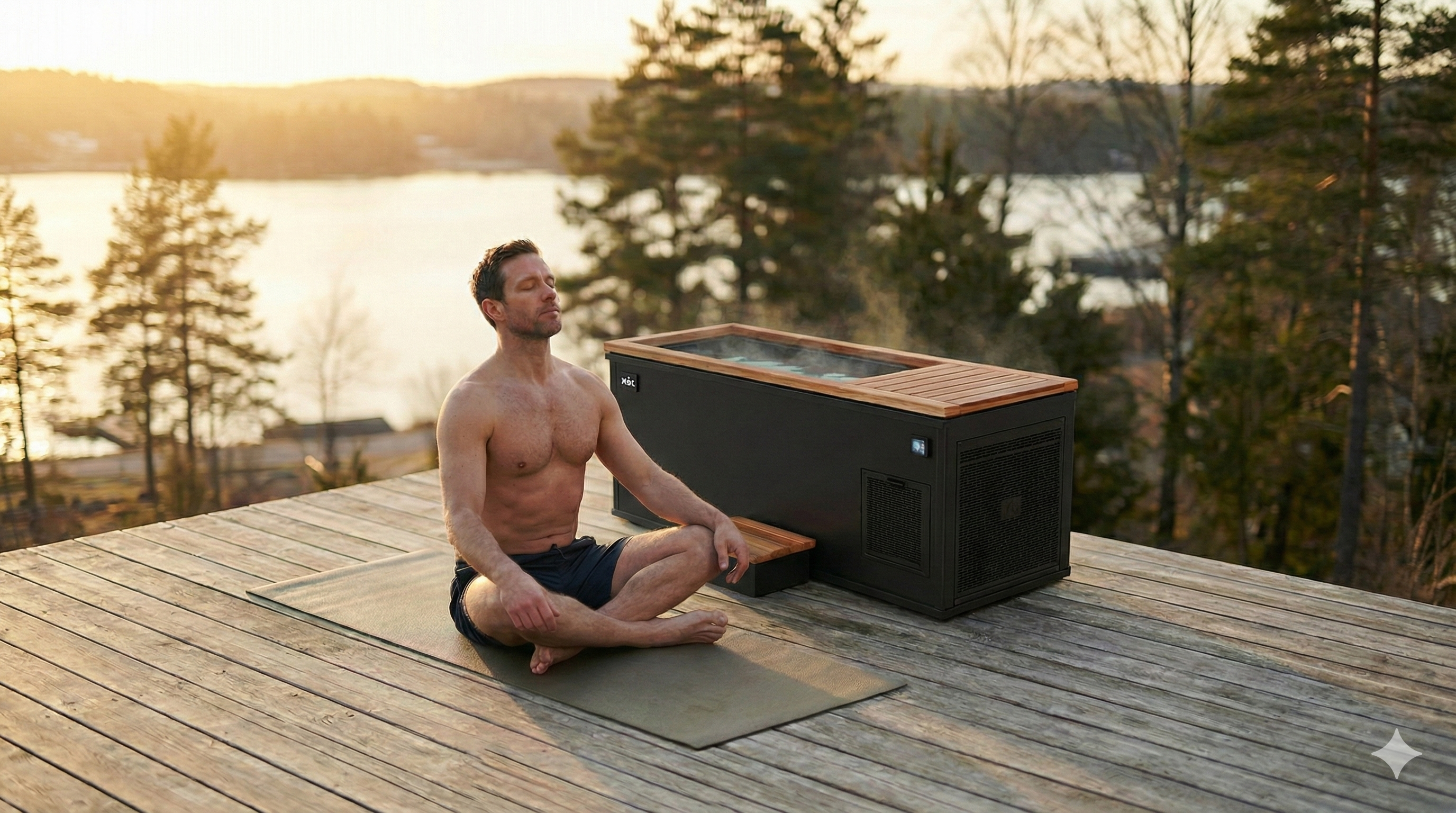
The breathing is done on land, sitting or lying in a safe place, before you enter your cold plunge tub.
Why? The hyperventilation phase significantly lowers your carbon dioxide levels. Because CO_2 is the trigger that tells your brain to breathe, having low levels means you could theoretically hold your breath until you pass out without ever feeling the "air hunger" urge. In water, this leads to shallow water blackout and drowning.
The correct protocol is:
-
Do your 3–4 rounds of breathing securely on a sofa or yoga mat.
-
Allow your body to enter that state of high adrenaline and alkalinity.
-
Finish the breathing exercise completely.
-
Walk calmly to your cold plunge tub and enter the water slowly and with control.
How is Wim Hof able to withstand cold?

The Physiology of Resilience: How Wim Hof Hacks the Cold
The Question: Is it genetics, or is it trainable? The Answer: It is a trainable biological protocol.
For years, scientists thought the autonomic nervous system was out of reach for conscious control, but Wim Hof — often referred to as “the Iceman” — showed that a combination of controlled breathing and cold exposure can change that. Research using fMRI and PET scans identifies three main physiological components of the Wim Hof method that explain how people can tolerate cold temperatures, gain benefits of cold therapy, and experience numerous health benefits from regular cold exposure.
Here is a clear, reader-friendly breakdown of the biological machinery at work and how the pillars of the Wim Hof approach help during cold immersion like cold showers or ice baths:
1. Neural Adaptation: The "Top-Down" Control
Hof isn't simply resisting the shock of cold — he uses a component of the Wim Hof practice to change how the brain interprets sensory signals. The combination of controlled breathing and cold exposure alters brain activity in measurable ways.
- The Mechanism: fMRI scans show that during a breathing session Hof voluntarily activates the Periaqueductal Gray (PAG) area of the brain, a region involved in pain modulation and stress responses.
- The Function: The PAG acts like a control center for reducing pain and the stress of cold. By engaging this area through combined breathing techniques and cold immersion, the brain increases release of endogenous opioids and cannabinoids (natural painkillers), which helps reduce perceived discomfort during ice bath or cold shower exposure.
- The Result: Think of it as a physiological volume knob that turns down the intensity of cold signals. This top-down control contributes to mental resilience and a greater ability to withstand extreme cold, whether you’re doing cold showers and ice baths as part of starting the Wim Hof Method or practicing it regularly. These neural changes support both physical and mental well-being and can lead to noticeable benefits like reduced stress and improved mental resilience.
When you practice the Wim Hof Method, the specific breathing techniques and cold exposure routines (rapid rhythmic breaths followed by breath-holding) shift blood chemistry toward respiratory alkalosis. This is a key part of how the Wim Hof Method helps with cold exposure and explains some of the effects of the Wim Hof protocol on body and mind.
- The mechanism: That pH shift triggers the sympathetic nervous system to release large amounts of epinephrine (adrenaline), a response similar to high-arousal activities.
- The metric: Measured adrenaline during Hof’s practice has been higher than levels seen before extreme activities, which helps explain numerous world records like running a half marathon or even a marathon above the Arctic Circle, and feats such as running half marathon above the arctic or arctic circle barefoot—achievements that contributed to him being referred to as “the Iceman.”
- The result: The adrenaline spike drives metabolic overdrive — increasing oxygen levels in the blood and temporarily boosting energy levels and improved circulation. It also reduces inflammation and can lead to an improved immune response, which may strengthen the immune system and contribute to faster recovery from physical exertion and recovery after physical stress. However, the Wim Hof Method may not be suitable for everyone, so consult a healthcare provider before starting.
Beyond brown fat activation, immediate internal heat comes from active muscles in the chest. The effects of combined breathing techniques and cold exposure show how breathing techniques and cold exposure work together to protect core temperature.
- The mechanism: PET scans show the intercostal muscles (between the ribs) work hard during the breathing and breath-holding cycles. These intercostal contractions burn glucose quickly to create heat inside the chest.
- The function: Because the lungs and chest are highly vascular, that locally produced heat raises the temperature of blood leaving the lungs, increasing oxygen delivery and improving circulation throughout the body.
- The result: The combined effects of the Wim Hof breathing and controlled cold exposure can boost energy levels and overall wellness, reduce perceived stress from temperature changes, and lead to various health benefits for physical and mental health — including improved immune function and potentially improved immune — though cold exposure may need to be introduced slowly and cold exposure gradually to be safe. Positive effects of combined breathing include increased oxygen levels, reduced inflammation, and faster recovery, but a healthcare provider should be consulted because this practice may not be suitable for everyone.
Why This Matters For You
You do not need to be the "Iceman" to utilize these pathways. Your body possesses the same biological hardware. Consistent cold exposure is the software update that turns these systems on.
Conclusion
Cold plunging is one of the most effective tools available for building resilience, managing inflammation, and boosting mood. But it is difficult.
The Wim Hof breathing method is the scientifically validated companion tool that makes the difficult sustainable. By utilizing this protocol, you aren't just enduring the cold; you are optimizing your biology to thrive in it.

%0A%C2%A0%0ALet%E2%80%99s%20be%20honest:%20staring%20down%20a%20tub%20of%2045%C2%B0F%20water%20is%20intimidating.%20Your%20brain%20is%20hardw...)